The U.S. Army Reserve is assessing whether it can make several support units available to U.S. Southern Command within the next four months, according to an internal Army message reviewed by CBS News.
The planning includes military police, medical personnel, engineers and logistics units. Multiple U.S. officials told CBS News that the request is part of continuing military planning related to possible contingencies involving Cuba, although the Army document itself does not mention the island.
The message does not indicate that any of the units have received deployment orders. Instead, it asks subordinate Army Reserve commands to determine whether specific formations could potentially be available in 90 to 120 days.
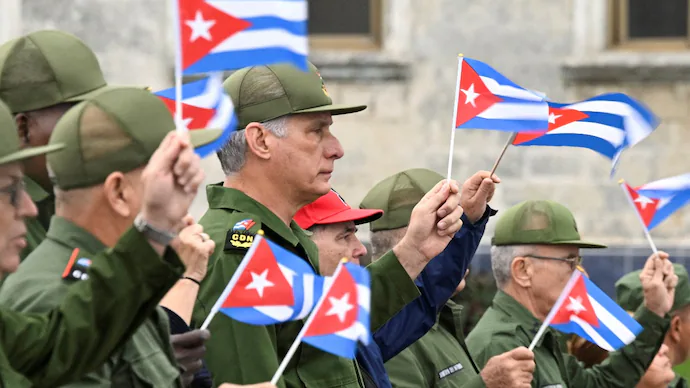
The development comes as the Trump administration increases economic and political pressure on Cuba and calls for changes on the island.
What does the Army Reserve message say?
The internal message asks Army Reserve commands to assess the availability of six types of formations that could potentially come under U.S. Southern Command, whose area of responsibility includes Central America, South America and the Caribbean.
According to the document, the units could be needed within 90 to 120 days. Army Reserve commands were instructed to provide feedback by September 25.
The requested formations include:
- A combat sustainment support battalion responsible for logistics such as transportation, maintenance, fuel and supplies.
- An engineer battalion capable of providing engineering support.
- An expeditionary sustainment command that can coordinate logistics across a theater of operations.
- A medical brigade responsible for coordinating medical units.
- A forward resuscitative and surgical detachment capable of providing emergency surgery and trauma care closer to deployed forces.
- A military police brigade, whose units can perform security, detention and other law-enforcement-related military missions.
The document does not state how many troops could ultimately be required, where they would be deployed or what specific mission they would perform.
Does the message mean US troops are being deployed to Cuba?
No deployment order has been identified in the document.
The distinction is important because military planning routinely considers potential contingencies before political leaders authorize an operation. Southern Command also declined to provide details about possible future deployments.
A Southern Command spokesperson told CBS News that the command does not disclose operational movements or potential deployment timelines because of operational-security concerns. The command said it continually works with the Joint Force to assess requirements within its area of responsibility.
The Army Reserve did not respond to CBS News before publication.
Therefore, the document shows force-availability planning, not confirmation that an operation against Cuba has been approved.
Why is Cuba part of the broader military planning?
The latest development follows months of increased attention within the U.S. government to Cuba and the possibility of military contingencies in the Caribbean.
CBS News previously reported that U.S. forces had conducted reconnaissance involving the seafloor and maritime approaches around Cuba. U.S. military personnel also told the network that airpower elements had been placed on heightened readiness and that personnel had been prepared for possible deployment.
Those plans did not ultimately result in the reported deployment.
In July, CBS News also reported that Pentagon planners had examined multiple military options involving Cuba, including an Army-led air assault involving thousands of troops. Officials emphasized at the time that the planning did not mean President Donald Trump or the Pentagon had decided to launch an operation.
The latest Army Reserve message is therefore another indication that contingency planning involving the region remains active, but it does not establish that military action is imminent.
What does the intelligence community say about Cuba?
The U.S. intelligence community has also identified Cuba as part of the broader strategic competition playing out in the Western Hemisphere.
The Office of the Director of National Intelligence’s 2026 Annual Threat Assessment says instability in countries including Cuba could contribute to migration pressures. It also says Russia is likely seeking to expand its security and diplomatic ties with Cuba and Nicaragua, while China, Russia and Iran are seeking to maintain economic, political and military engagement across Latin America.
The assessment places those developments within a wider discussion of competition in Latin America and the Caribbean rather than describing Cuba itself as an independent military threat to the United States.
That distinction is relevant to understanding Washington’s current approach. U.S. officials have raised concerns about foreign influence in the Western Hemisphere while simultaneously focusing on migration, organized crime, narcotics trafficking and political instability.
How has the Trump administration increased pressure on Cuba?
The administration has pursued economic measures alongside its broader policy toward Havana.
The latest sanctions reportedly target Cuban entities and officials, including organizations connected to the country’s nickel sector and military research and development apparatus.
President Trump also used his address to the United Nations General Assembly to call for a “fundamental change” in Cuba and said he expected the island’s communist government to fall.
The Cuban delegation reportedly left the General Assembly during his remarks.
What is the “Donroe Doctrine”?
The Trump administration’s broader Western Hemisphere strategy has sometimes been described by officials and commentators as the “Donroe Doctrine,” a reference combining Trump’s name with the Monroe Doctrine.
The Monroe Doctrine, first articulated in 1823, warned European powers against further colonization or political interference in the Americas.
The newer term is used to describe a Trump-era approach emphasizing U.S. influence in the Western Hemisphere and opposition to involvement by strategic competitors.
The 2026 intelligence assessment similarly identifies increasing Chinese, Russian and Iranian economic, political and military engagement in Latin America as an issue for U.S. interests.
The term “Donroe Doctrine” should therefore be treated as a description of the administration’s approach rather than a formal legal doctrine equivalent to the original Monroe Doctrine.
Is the US military already operating more aggressively in the Caribbean?
U.S. military activity in the region has expanded beyond traditional maritime drug-interdiction missions.
According to CBS News, U.S. forces have carried out dozens of strikes in the Caribbean Sea and eastern Pacific Ocean since September, with more than 230 people reportedly killed across approximately 70 strikes.
The operations have prompted legal debate over the circumstances under which the U.S. military can use lethal force against suspected criminal or narcotics-related targets.
Some legal experts cited by CBS News have argued that certain strikes could violate international or domestic legal restrictions if individuals targeted do not meet the applicable standards for military force.
The administration’s position and the legal interpretation of these operations remain separate questions from the Army Reserve planning for possible Cuba-related contingencies.
What could the requested units actually do?
The composition of the requested formations offers some clues about the type of contingency planners may be considering, without establishing a specific operation.
Military police
A military police brigade could provide security, detention and law-enforcement-related support in a military operation.
Medical forces
A medical brigade and forward surgical capability could provide treatment for injured personnel in environments where established medical facilities are unavailable or too distant.
Engineers
Engineer units can support construction, infrastructure, mobility and other operational requirements.
Logistics units
The sustainment formations would help move personnel and equipment and maintain supplies, fuel and transportation.
Taken together, the units represent support infrastructure that could be useful in a range of military contingencies. Their identification does not, by itself, reveal whether planners are preparing for combat, humanitarian assistance, evacuation, security operations or another mission.
What happens next?
The immediate step outlined in the Army message is an assessment of force availability.
Army Reserve commands are being asked to determine whether the requested formations could potentially be provided within the 90-to-120-day window.
That process is different from issuing deployment orders. Additional decisions would be required before reservists were formally directed to deploy, and the mission, location and size of any deployment would depend on subsequent orders and operational requirements.
For now, the document provides evidence of continued contingency planning in the U.S. Southern Command region.
It does not establish that the United States has decided to invade Cuba or that American forces are preparing for an imminent operation on the island.
Why the distinction between planning and deployment matters
Military organizations routinely plan for potential scenarios that may never occur.
A request to identify available forces can be an early step in preparing options for policymakers. It can also allow commanders to determine how quickly specific capabilities could be assembled if circumstances change.
The latest Army Reserve message therefore adds another piece to a larger picture of U.S. military planning in the Caribbean.
But the available evidence stops short of confirming an operational decision.
For now, the key facts are that Army Reserve headquarters is assessing the availability of several specialized formations, the units could potentially be needed within 90 to 120 days, and officials have connected the planning to possible Cuba-related contingencies.
Whether those forces are ever activated or deployed remains undetermined.
TL;DR
- The U.S. Army Reserve is checking whether six types of support formations could be available to Southern Command within 90–120 days.
- The formations include military police, medical, surgical, engineering and logistics units.
- Multiple U.S. officials told CBS News the planning is related to potential Cuba contingencies, although the Army document itself does not mention Cuba.
- There is no deployment order in the document.
- The Pentagon has previously examined several military options involving Cuba, but officials have stressed that contingency planning does not mean an operation has been authorized.
- The development comes amid increased U.S. economic and political pressure on Havana and concerns about Russian, Chinese and Iranian engagement in the Western Hemisphere.
- The latest message indicates continued military planning, but it does not establish that U.S. military action against Cuba is imminent.